In the digital tourism sector, many companies believe they have their tax position clear. That is not always the case, and the difference can be significant.
A recent ruling from the Directorate-General for Taxation (DGT) could completely change how a bedbank is taxed under the Digital Services Tax (IDSD), governed by Law 4/2020.
What the DGT examined
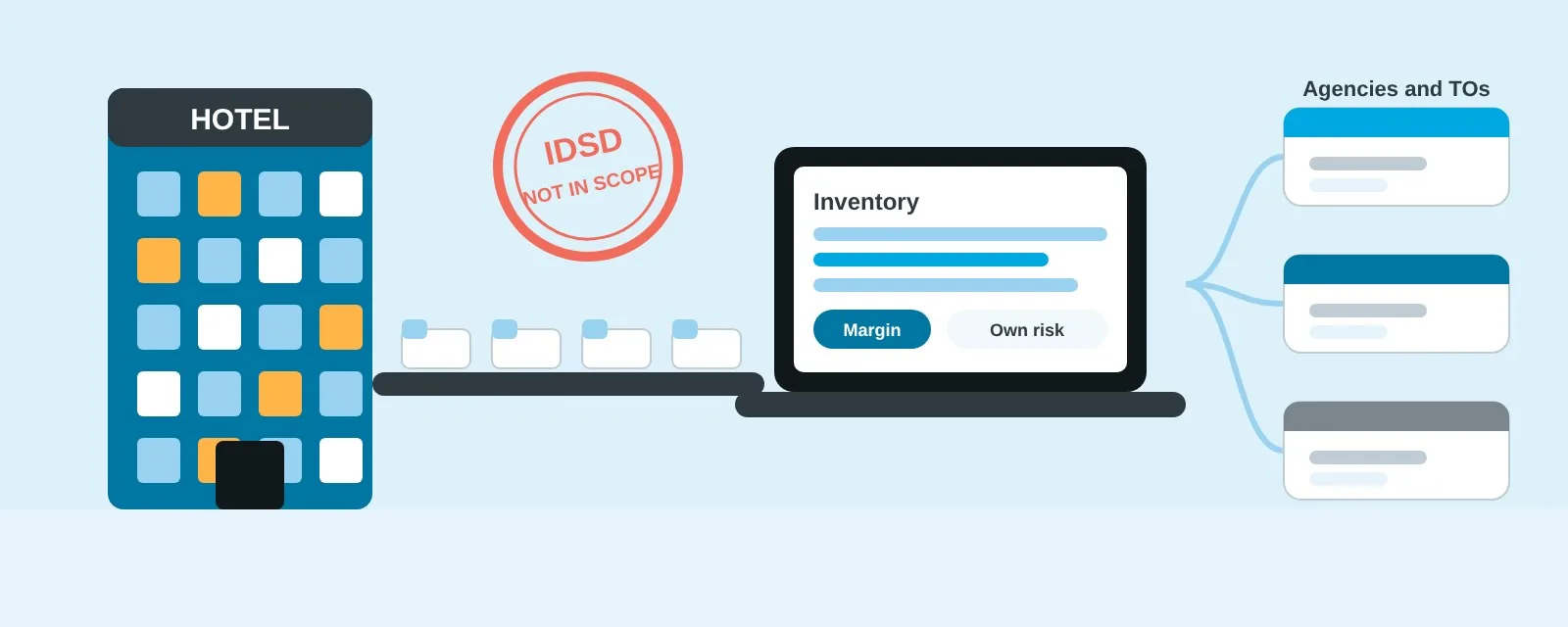
In binding ruling V1996-25 of 24 October 2025, the DGT examines how bedbanks are taxed in relation to this tax. It does so on the basis of a very common model in the sector: entities that buy rooms from hotels and redistribute them, through a digital interface, to travel agencies, tour operators and online platforms.
It is a clear model from a commercial point of view, but its tax implications are not always being interpreted correctly.
How a bedbank operates and why it matters
Bedbanks act as B2B wholesalers: they acquire large volumes of rooms and tourism services at negotiated prices and resell them to travel agencies, tour operators and online platforms.
In the case examined by the DGT, the entity:
- Acquires rooms in two ways: through advance allotments, buying in bulk at a fixed price, bearing the full risk and providing a 100% guarantee or deposit; or on a free-sale basis, paying before the stay and collecting payment afterwards (15 to 30 days).
- Adds that inventory to its own digital interface.
- Distributes the rooms through agencies and operators.
The key question: intermediary or provider?
The DGT focuses on determining whether this activity is an online intermediation service under Article 4(7) of the Digital Services Tax Law. The distinction is decisive, because the tax applies to, among other things, digital intermediation services.
Not every digital operator is an intermediary for tax purposes. According to the DGT’s settled doctrine (rulings V1273-19 and V0369-20), only someone who is paid on the basis of the conclusion of the contract they mediate, in other words a success-based commission, is an intermediary. That is why the classification depends on the legal and economic substance of each operation.
The factors that determine the tax treatment
Applying that doctrine, the DGT identifies several factors that lead it to conclude that the entity does not act as a mere intermediary:
- It bears the risks of a service provider: inventory risk (it pays even if it does not sell the rooms), credit risk from customer non-payment and exchange rate risk.
- It is directly liable to the traveller, for example in the event of overbooking.
- It sets its prices independently, with a commercial margin rather than a commission.
- It accounts as principal.
These elements show that the entity does not merely facilitate a transaction between third parties but is a principal party to it.
The DGT’s conclusion
Under those conditions, the DGT concludes that the bedbank does not act as an intermediary for the purposes of the Digital Services Tax, but directly provides the accommodation service to travellers. The operation examined is not subject to the online intermediation category of the tax.
A view that goes beyond this case
This ruling adds to other administrative positions on different players in the sector: hotel management companies, travel agencies and marketing in their own name on behalf of the hotel. The framework is increasingly well defined, but each business model has to be analysed individually. Two companies with apparently similar models can receive completely different tax treatment.
Effects beyond the Digital Services Tax
The same classification has consequences for:
- VAT and the possible application of the special VAT scheme for travel agencies (REAV).
- The reporting obligations under the DAC 7 Directive.
- The contractual and operational structure of the business.
That is why the analysis must be holistic.
What should you review now if you operate as a bedbank?
If you operate as a bedbank or hotel distributor, review:
- The real nature of your operations.
- The risks you bear.
- How you structure prices and contracts.
- Your position in relation to customers and suppliers.
In short, whether or not your model falls within the scope of the Digital Services Tax.
Frequently asked questions
Is a bedbank subject to the Digital Services Tax?
According to DGT binding ruling V1996-25, not under the online intermediation category where the bedbank buys and resells at its own risk, sets its prices with a margin and accounts as principal. Each model must be analysed separately.
When is a digital operator an intermediary for IDSD purposes?
According to DGT doctrine (V1273-19 and V0369-20), when its remuneration depends on the conclusion of the contract it mediates, in other words when it charges a success-based commission.
Does this classification affect VAT?
Yes. The same question of whether you act in your own name or as an intermediary affects the possible application of the special VAT scheme for travel agencies (REAV) and the DAC 7 obligations.
Sources
This article is for information only and does not constitute legal or tax advice.