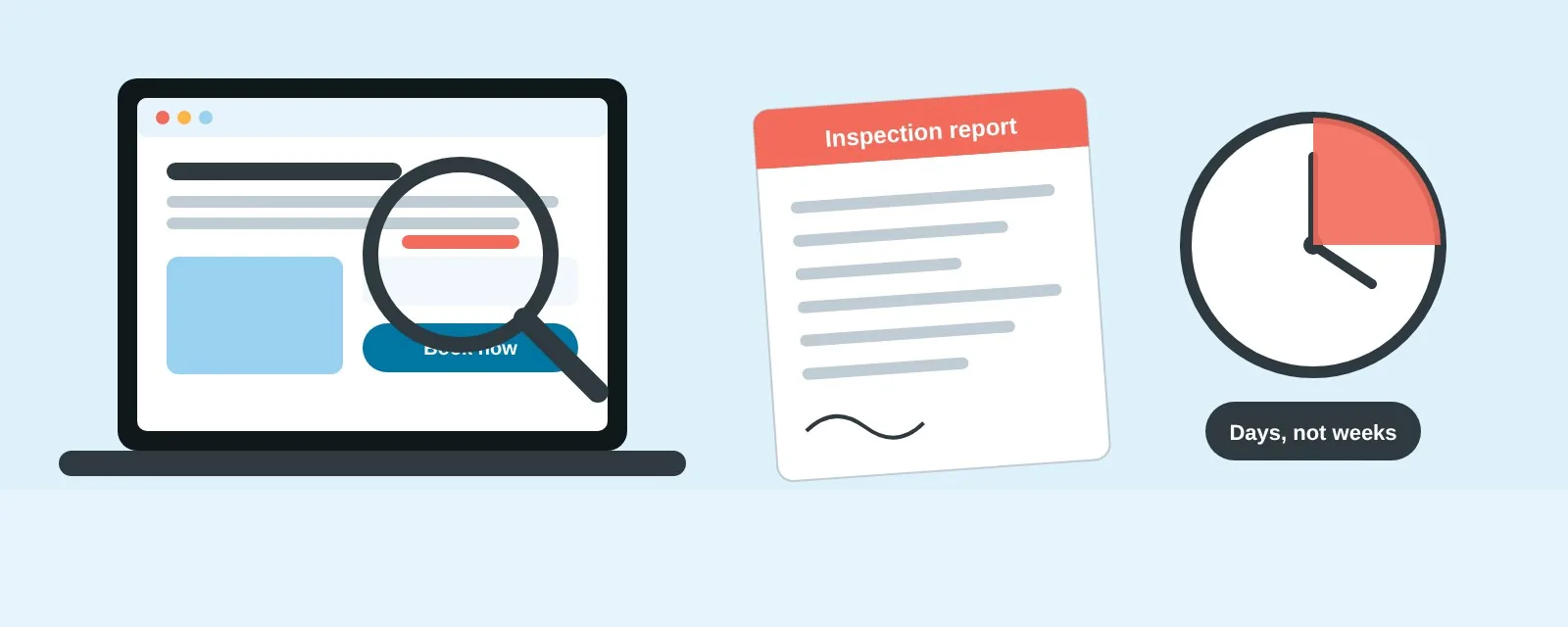
Received an inspection report or a request? You have days, not weeks. The first thing is to find the deadline in the notice and organise your response. The second is to understand what stage the procedure is at, because a request for documents is not the same as sanctioning proceedings already under way.
What stage am I at?
Request for documents
The consumer protection authority asks you for information or documents: terms and conditions, pre-contractual information, screenshots of the booking process, contracts or receipts. There is no penalty yet. This is the best moment to respond in an orderly way and correct anything that is not right.
Inspection report
It records what the inspection has found, for example on your website or at your office. Review it carefully before signing it and make sure your observations are recorded: what the report says will be used later.
Decision to open sanctioning proceedings
This is where the sanctioning procedure begins. The notice sets out the facts, the possible infringement, the proposed penalty, the competent body and the deadline for submitting representations. If you do not submit representations in time, the decision to open proceedings may be treated as the proposed decision.
Proposed decision and final decision
After the representations and, where applicable, the evidence stage, the authority issues a proposed decision, against which you can also submit representations, and then issues its final decision.
What do I do if I receive an inspection report or a request from the consumer authority?
- Note the deadline and the body that sent it.
- Gather the documents requested and check that they are the versions in force on the dates concerned.
- Identify the breaches pointed out and correct those you can before responding.
- Respond in writing and through the stated registry, with an orderly explanation and numbered documents.
- Review the rest of your website: if there is a problem in one place, there are usually others.
What does the consumer authority usually check on a travel agency’s website?
In our experience, the points most often checked are:
- Pre-contractual information for packages and the standard information form.
- The general terms and conditions and the cancellation policy.
- That prices are shown in full, including taxes and charges.
- The agency’s identification details and registration number.
- Information on complaints and official complaint forms.
- The website’s legal notices: legal notice, privacy and cookies.
Can I pay the penalty with a reduction?
Yes, if the penalty is purely financial. Article 85 of Law 39/2015 on Common Administrative Procedure provides for reductions of at least 20% for admitting liability and for paying voluntarily before the decision, and they can be combined. The notice opening the proceedings must state them.
Can I appeal a consumer penalty I have already paid at a reduced amount?
Not through administrative channels. Article 85.3 of Law 39/2015 makes the reductions conditional on waiving any administrative action or appeal against the penalty. That is why you should decide before paying whether you want to dispute the facts or the amount.
How do I appeal the decision?
It depends on whether the decision exhausts administrative remedies:
- If it does not, an administrative appeal (recurso de alzada) may be lodged within one month of notification.
- If it does, an optional application for reconsideration (recurso de reposición) may be made within one month, or you can go straight to the contentious-administrative courts.
The decision itself must state which appeals are available, before which body and within what deadline.
What about customer complaints to the OMIC or consumer arbitration?
They are a separate route from inspection, but they often trigger one. A complaint to the municipal consumer information office (OMIC) or a badly handled official complaint form can end in an inspection. If your company has joined the consumer arbitration system, complaints can be resolved by an arbitral award. Responding properly and on time to every complaint is the best prevention.
Frequently asked questions
How long do I have to respond to a request from the consumer authority?
Whatever the notice states. It is usually short, a matter of working days, so it is best to organise your response as soon as it arrives.
Can I appeal a consumer penalty if I pay it with a reduction?
Not through administrative channels. Article 85.3 of Law 39/2015 makes the reductions conditional on waiving any administrative action or appeal against the penalty.
What is the deadline for an administrative appeal (recurso de alzada)?
One month from notification of the decision, where the decision does not exhaust administrative remedies.
Should I sign the inspection report?
Signing it confirms that you have received it, not that you agree with its content. Review it and make sure your observations are recorded.
Sources
This article is for information only and does not constitute legal or tax advice.